Showing posts with label house prices. Show all posts

Monday, 21 August 2017

Does the Lake District have the most resilient house prices in the UK?

About us: 
We were able to help a home owner recently, the house was worth less than the mortgage. She really wanted to move due to work.  We were able to provide a solution so that she was able to move on without losing out financially.  If this sounds like you, please get in touch and we will discuss your options free of charge.

http://reachukproperties.com/

Does the Lake District have the most resilient house prices in the UK? 
 
New mansions today are built with state-of-the-art gyms, winter gardens, temperature-controlled wine rooms and all the latest must-haves to show off a house’s grand stature. A century ago, this was no different (although the mod cons varied slightly).

Hylands in Kendal, Cumbria, was the archetypal Edwardian show home, an architectural masterpiece designed to showcase the features that were most fashionable in the early 1900s. Abraham Pattinson, who was responsible for many of the finest houses in the Lake District, built Hylands in 1910 to live in and parade his wares to potential customers.

The builder, whose descendants still run the local firm, created three types of window, from timber framed to leaded light. A bay window in the dining room overlooks the terrace, lawns and tennis courts, and there’s an inglenook reading area in the hall. Oak was used liberally in panelling, flooring and for a sweeping staircase. Intricate plaster cornicing and roses adorn the drawing room ceiling.


The current owner, Alex Julian, spends most of her time in the kitchen, with its double-size Aga and French windows. It’s from this recently refurbished room that she teaches sugar craft and baking, while her husband, Marten, a journalist and author, works in the converted two-storey stone and slate apple store. The pair have put the property and its 2.3 acres of land on the market for £1.4 million and plan to downsize. “It needs to ring with the sound of a young family once again,” Julian says.

The nine-bedroom property is on Brigsteer Road, one of the most exclusive enclaves in Kendal. Just as Hylands was Pattinson’s flagship project, the surrounding area of South Lakeland, which stretches from north of Lake Windermere down to Kirkby Lonsdale, is emblematic of rural Britain. It attracts walkers and wildlife-lovers from all over the world, and only last month joined the ranks of the Grand Canyon and Machu Picchu in being named a Unesco World Heritage Site.

“There will be more overseas interest [in holiday homes] as a result of its new status, especially with the exchange rate being so attractive,” says Mark Holden of Savills.

The global financial crisis hit the UK’s country market hard, and rural prices, on average, are yet to fully recover. However, activity in this part of the Lake District remains steady; even last year’s vote to leave the European Union failed to quell interest.
  
“We seem to be shielded from house price falls,” says Iain Bainbridge, founder of local agency Scott Bainbridge, which is marketing Hylands. “Demand always outstrips supply here.”

Values in South Lakeland averaged £221,883 in May this year, four per cent higher than in January 2008. As UK property prices started to collapse, this pocket of the North West suffered only three consecutive months of falling values, compared with nine in Cornwall, another holiday home haven, where prices today are still below the January 2007 level.

A typical property in Kendal – dubbed the southern gateway to the Lake District and the area’s largest town – sold for £204,969 over the past 12 months. The traditional market town is still dominated by full-time residents, many of whom tap into the Lake District’s tourism trade, which powers the local economy. Several of the properties on the market come with guesthouses.

Would you live in the Lake District? 

Read more here:  http://www.telegraph.co.uk/property/buy/does-lake-districthave-resilient-house-prices-uk/

Monday, 31 July 2017

Housing market still reeling a decade after financial crisis

Are you struggling to sell or rent your house? We can help and you don't need to pay any fees. Contact us via: http://reachukproperties.com/

Housing market still reeling a decade after financial crisis, Savills says

Report by estate agent finds ‘dramatic slump’ in spending and transactions, and ‘huge gap’ between London and rest of UK


Ten years on the housing market is still feeling the after-effects of the credit crunch, with existing homeowners struggling to trade up, a doubling of typical first-time buyer deposits, and a “huge gap” between London and the rest of Britain, according to a new report.

Property company Savills has found that the global financial crisis – which it considers to have started on 9 August 2007, when the French bank BNP Paribas froze three investment funds – is “still shaping the UK housing market” and will continue to cast its shadow over the sector for years to come.

In the report, the firm says the property market is “more divided at a regional level than ever before”. Over the past decade, London price growth has been twice that of the south-east and at least four times that of all other regions.

The average house price now stands at £478,142 in London, compared with the UK average of £209,971, the report says. By contrast, Wales, Yorkshire and Humberside, and the north-west have only just achieved positive price growth 10 years post-credit crunch, while values in the north-east are typically down 9%, according to the firm’s analysis of data from the Land Registry and other sources.

The report also identifies a “dramatic slump” in spending and transactions. A total of £312bn was spent on house purchases in the year to the end of March 2017 – £30bn less than the figure for 2007. Meanwhile, the amount of mortgage lending where the borrower is putting down a deposit of under 10% has reduced to less than one-fifth of the £52bn in 2007. This category of lending now represents only 3.9% of the total, whereas in 2007 it was more than 14%.

Homebuyers now need bigger deposits. The average deposit raised by a UK first-time buyer has more than doubled to £26,224, although in London it has more than quadrupled, rising from £21,196 a decade ago to £97,513 now.

First-time buyer deposits totalled £10.2bn in the year to the end of March 2017 – up 85% on 10 years ago, the report says. Savills estimates that more than £4bn of this came from either “the bank of mum and dad” or government schemes such as help to buy.

Fewer homeowners are able to climb the property ladder. In 2007, one in 15 existing homeowners moved house, a figure that has fallen to one in 27 in 2017. “Long gone are the days when interest-only borrowing would allow homeowners to make frequent moves up the ladder. Over one in three mortgages in 2007 were interest-only – some 343,200 – but they have now all but disappeared, down to just 8,000 in the past year,” Savills says.

A separate report also released on Thursday claims that only 37% of homes put on the market in London are actually selling, providing further evidence of a slowdown in the property market.

The HomeOwners Alliance analysed estate agents’ listings and housing transactions, finding that, in May 2017, 55% of all properties listed resulted in a successful sale, compared with 59% a year ago. The other 45% were either taken off the market by the seller or simply remained listed.

However, the picture in London is “even bleaker”, according to the alliance, as only 37.3% of listings resulted in a sale, compared with 48.3% in May last year.

Properties that are selling are also taking longer to do so. A year ago, homes in the capital stayed on the market for an average of 56.6 days each, but now it takes agents an average of 72 days to agree a sale. And in May 2016, properties in London were achieving an average of 98.1% of their asking price, but a year later that figure had slipped to 95.8%.

What do you think to the current prices of houses in the UK? 

https://www.theguardian.com/business/2017/jul/27/housing-market-still-reeling-a-decade-after-financial-crisis-savills-says?_ga=2.46422567.1456369318.1501495904-957141527.1501495904

Sunday, 16 April 2017

Is It The Best Time To Buy A House?

Is NOW the best time to buy property? UK house prices FALL for second month.

House prices in the UK fell by 0.4 per cent this month; is now the time to invest in property in Britain?

The Nationwide House Price Index today revealed the stark truth about the state of the property market: it's in decline.
House prices across the UK fell by 0.4 per cent in April - challenging forecasts made expecting the return of growth. The price fell for the second consecutive month.
And the news doesn't stop there - the fall is the worst monthly decline since 2012 with the average price of a UK home falling to £207,699. 
While it might read like doom and gloom for property owners it could be the ideal time for Brits looking to join the property ladder to invest in the market. 
And it's worth noting that, while there was a fall of 0.4 per cent, the index was still sat at 2.6 per cent higher compared to the same month last year.

http://www.express.co.uk/life-style/property/797737/Best-time-to-buy-sell-house-2017

Tuesday, 11 April 2017

UK Rents Expected To Rise Faster Than House Prices In The Coming Years?

UK rents expected to rise faster than house prices in next five years

Rics survey heaps further misery on Britain’s growing army of renters, who will likely have fewer properties to choose from.

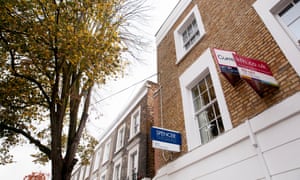
To let signs in Islington, north London

UK rents are expected to rise faster than house prices over the next five years, bringing further misery to Britain’s growing army of renters, according to a survey.
The Royal Institution of Chartered Surveyors has predicted that rents will increase by just over 25% in the coming years, while property values are set to grow by less than 20%.
In the three months to January, tenant demand for rental properties continued to go up. With landlords expected to scale back their portfolios in the next 12 months, tenants will have fewer properties to choose from, which is likely to push rents higher, the survey suggests.


Rics said there was a lack of new listings coming on to the lettings market for the fourth quarter in a row and its members expect this to worsen.
The past few months have seen a number of buy-to-let investors sell up, including Britain’s biggest landlord, Fergus Wilson and his wife, Judith, who declared that the days of small buy-to-let landlords were numbered after the stamp duty increase last year and other tax changes, along with tougher mortgage rules.
Brian Murphy, the head of lending at the Mortgage Advice Bureau, said rent increases in many areas over coming months were “potentially a good outcome for landlords who are staying in the buy-to-let game, but not so great for tenants in the private rented sector”.
Do you think this will change the popularity of renters in comparison to people with a mortgage in the future? 
https://www.theguardian.com/business/2017/feb/09/uk-rents-rise-faster-house-prices-next-five-years-rics-survey