Showing posts with label london. Show all posts

Friday, 18 August 2017

Is it a bad idea to buy a property in London if it's not home for life?

Is it a bad idea to buy a property in London if it's not home for life?


I would prefer buying to renting but fear a 2007-like crash may wipe out value and make it tough to resell

Q I’m 26, living in London, and on civil service salary of £34,500, and after I’ve completed my graduate scheme, I should be on £50,000-plus in a couple of years. I’m fortunate to have £110,000 in cash – from savings and inheritance – to put towards the purchase of a property.

I am young and single and like living in London, it suits my lifestyle now, but not if I decided to start a family and settle down. I was considering buying a flat in London, with the idea that it would be my first home, and I would sell it off by the time I was 32. I’d like to have a place to call my own, and I am currently paying £800 a month in rent, which I could pay towards a mortgage.

Given London’s housing market, and potential for a slowdown or crash, is it a bad idea to buy a property in the capital, if I don’t plan to hang on to it? I am concerned about buying, and then being unable to sell for a reasonable price in a few years’ time. CP


A Recent claims – made by Paul Cheshire, professor of economic geography at the London School of Economics – of an impending crash and a 40% fall in property values are “quite frankly outrageously unrealistic” according to Russell Quirk, founder and chief executive of online estate agent, eMoov.co.uk. “The reality is that the rate of house-price growth has slowed in the past few months, yet property prices remain higher than a year ago” although Quirk does concede, as do other commentators, that there is “a potential prolonged flat rate of growth” in house prices. 

John Hawksworth, chief economist for PwC expects “average London house price rises to be sluggish for the next two to three years, but not for prices to crash”.

So it would appear that buying a property in London now and keeping it for five years isn’t a bad idea. But even if Cheshire is right, some research by eMoov.co.uk, suggests that you wouldn’t be out of pocket in five years’ time and unable to sell for a reasonable price. 

Using historical data about the 2007 house-price crash and the time it took for prices to recover, eMoov.co.uk has worked out that if there was a crash today, it would take on average seven years and seven months for prices to recover to their current level. However, in London, it would take just four years and seven months. 

So if you bought a flat now for £300,000 and there was a similar crash to the one in 2007, your flat would still be worth £300,000 after five years and possibly a little bit more.

In addition, if you did buy now and put your rent money towards a mortgage, in five years’ time, the amount outstanding on the loan would be less than when you took it out. So you get to keep more of the sale proceeds to put towards your next property.

Do you own a home in London? 

https://www.theguardian.com/money/2017/aug/07/is-it-a-bad-idea-to-buy-a-property-in-london-if-its-not-home-for-life

Monday, 31 July 2017

Housing market still reeling a decade after financial crisis

Are you struggling to sell or rent your house? We can help and you don't need to pay any fees. Contact us via: http://reachukproperties.com/

Housing market still reeling a decade after financial crisis, Savills says

Report by estate agent finds ‘dramatic slump’ in spending and transactions, and ‘huge gap’ between London and rest of UK


Ten years on the housing market is still feeling the after-effects of the credit crunch, with existing homeowners struggling to trade up, a doubling of typical first-time buyer deposits, and a “huge gap” between London and the rest of Britain, according to a new report.

Property company Savills has found that the global financial crisis – which it considers to have started on 9 August 2007, when the French bank BNP Paribas froze three investment funds – is “still shaping the UK housing market” and will continue to cast its shadow over the sector for years to come.

In the report, the firm says the property market is “more divided at a regional level than ever before”. Over the past decade, London price growth has been twice that of the south-east and at least four times that of all other regions.

The average house price now stands at £478,142 in London, compared with the UK average of £209,971, the report says. By contrast, Wales, Yorkshire and Humberside, and the north-west have only just achieved positive price growth 10 years post-credit crunch, while values in the north-east are typically down 9%, according to the firm’s analysis of data from the Land Registry and other sources.

The report also identifies a “dramatic slump” in spending and transactions. A total of £312bn was spent on house purchases in the year to the end of March 2017 – £30bn less than the figure for 2007. Meanwhile, the amount of mortgage lending where the borrower is putting down a deposit of under 10% has reduced to less than one-fifth of the £52bn in 2007. This category of lending now represents only 3.9% of the total, whereas in 2007 it was more than 14%.

Homebuyers now need bigger deposits. The average deposit raised by a UK first-time buyer has more than doubled to £26,224, although in London it has more than quadrupled, rising from £21,196 a decade ago to £97,513 now.

First-time buyer deposits totalled £10.2bn in the year to the end of March 2017 – up 85% on 10 years ago, the report says. Savills estimates that more than £4bn of this came from either “the bank of mum and dad” or government schemes such as help to buy.

Fewer homeowners are able to climb the property ladder. In 2007, one in 15 existing homeowners moved house, a figure that has fallen to one in 27 in 2017. “Long gone are the days when interest-only borrowing would allow homeowners to make frequent moves up the ladder. Over one in three mortgages in 2007 were interest-only – some 343,200 – but they have now all but disappeared, down to just 8,000 in the past year,” Savills says.

A separate report also released on Thursday claims that only 37% of homes put on the market in London are actually selling, providing further evidence of a slowdown in the property market.

The HomeOwners Alliance analysed estate agents’ listings and housing transactions, finding that, in May 2017, 55% of all properties listed resulted in a successful sale, compared with 59% a year ago. The other 45% were either taken off the market by the seller or simply remained listed.

However, the picture in London is “even bleaker”, according to the alliance, as only 37.3% of listings resulted in a sale, compared with 48.3% in May last year.

Properties that are selling are also taking longer to do so. A year ago, homes in the capital stayed on the market for an average of 56.6 days each, but now it takes agents an average of 72 days to agree a sale. And in May 2016, properties in London were achieving an average of 98.1% of their asking price, but a year later that figure had slipped to 95.8%.

What do you think to the current prices of houses in the UK? 

https://www.theguardian.com/business/2017/jul/27/housing-market-still-reeling-a-decade-after-financial-crisis-savills-says?_ga=2.46422567.1456369318.1501495904-957141527.1501495904

Wednesday, 12 July 2017

Buying my own place was an impossible dream – here’s how it came true

Buying my own place was an impossible dream – here’s how it came true


If someone had told me at the start of last year that I’d be living in – scratch that – owning a two-bedroom loft apartment with a suntrap of a terrace, I’d have rolled my cynical eyes. As a Generation Rent 34-year-old millennial living in London and working as a freelance journalist on a modest income, buying my own place always felt like an impossible dream.

For starters, the average deposit for first-time buyers in London has jumped 276% in the past decade to a staggering £100,445, according to the Halifax. I did explore shared ownership, but I found many of the schemes insanely competitive and only available to people on much higher salaries, while service charges were steep, culminating in mortgage repayments plus rent settling in at about £1,500 a month.

A close mate suggested we join forces and buy a place together. Yes, I thought. Propped up by someone on a much higher salary, here was my one chance to buy a property in the capital. Except we had very different ideas. She was intent on staying in Hackney and splashing out up to half a million – the maximum amount we could borrow – on an ex-council flat, while I sought extra square feet for a fraction of the price in the less well-established neighbourhoods of Walthamstow and Tottenham.

And so, with that idea evaporating as quickly as it started, I’d put the idea of buying to bed when an article about a wave of like-minded creative folk who were swapping London for Margate stopped me in my tracks. A bit of digging and I could see there was a buzz about the place. In line with my spontaneous side I quickly announced: “I’m moving to Margate!” to my astounded pals. My boyfriend at the time asked: “Have you ever been to Margate?” No. But something screamed that I had to jump at this. Rather than spend my savings on travel, I needed to think of my long-term future.

I knew I wouldn’t ever be able to afford to buy much more than a treehouse in London, but Margate – somewhere that sounded like it had an artsy community going on and I could commute from – well, maybe it was just possible? Still, I knew the bubble could easily be pricked: mortgage lenders aren’t known for handing over wads of cash to freelancers, although there are 1.9 million of us in the UK.

A friend of mine who has also headed to Margate, freelance fashion stylist Issie Gibbons, recalls the challenges she faced when she and her now-husband, Oliver Archibald, a self-employed plumber, originally planned to buy in London. “We had a mortgage adviser who told us to come back in two years’ time with more profit shown on our yearly accounts.”

The couple decided to declare more profit in their tax returns by lowering their expenses. “It meant very high tax bills for two years, which ate into our deposit savings,” she said. The couple bought a flat in Margate last spring. “We got there in the end but it was hard work – we had friends in full-time employment earning less than us who were getting mortgages really easily.”


And here I was attempting to buy on my own. It didn’t look promising. I contacted mortgage broker Sam Cox, a consultant at IFA firm Whichers, on the recommendation of a friend and explained my situation: I had a deposit of £23,500, which included £10,000 from my parents (though I could have just about bought the property without this top-up) and a few thousand from my help-to-buy Isa (I can’t recommend using one of these enough – start now).

Sam was my calming guardian angel throughout. She asked me to fill in a long questionnaire and provide my last two SA302 tax forms, which provide evidence of earnings. When she first calculated how much I could borrow, it didn’t look too rosy. Most lenders work on an average of your last two profit figures, but because I’d travelled and lived abroad my profits had taken a hit. However, as my income had increased substantially over the past year, she suggested I complete my 2015-16 tax return early, which helped increase my borrowing potential.

Meanwhile, I sloped off to Margate for the first time and fell in love with a two-bedroom flat. To cut a long story short, after many bids – going well over the asking price – I bagged it … well, for a week, until I was gazumped. But when the cash buyers split up two months later, the estate agent gave me first refusal.

Like many property purchases, the buying process was far from smooth and it took six long months to complete. But on 30 December I moved in. With interest rates at an all-time low, the mortgage for the flat, which cost £155,000, is considerably lower than the rent I was forking out for a room in an often mice-and-cockroach-infested two-bed flat in Islington.
For those who are self-employed and similarly hungry to buy their first home, Sam offers some heartening news: she says more lenders are extending their criteria to help those no longer on the payroll.
So what can freelancers do to help improve their chances of getting a mortgage? “First, your tax affairs need to be in order, and if there is income from more than one source – ie, earned income – then keep payslips, P60s and contracts etc,” Sam says. “Presenting a CV of the job roles you have had over the past two years also really helps.” Plus a sizeable deposit can help win over lenders, of course.
It’s six months since I walked into that empty flat – a world away from my life in London. And though no one ever enlightens you about the never-ending associated costs of homeownership (hello leaks and boiler issues), I feel very fortunate that I found a home in a soul-stirring town with a wonderful community, beach and incredible sunsets on my doorstep. After all the stumbling blocks, it was worth the wait.

Did you struggle securing your first mortgage?

https://www.theguardian.com/money/2017/jun/17/generation-rent-first-time-property-buyer

Sunday, 18 June 2017

Is this the biggest end terrace in the UK?

With its whopping 60 bedrooms, this former hotel in west London comes with original art deco features and a fascinating history. But would you fancy taking it on?


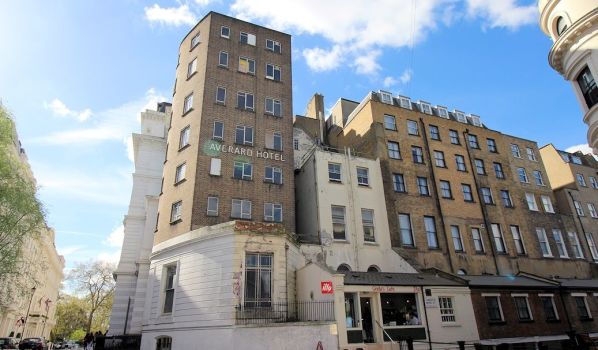
A long-derelict former hotel in west London has hit the market for £35m.
And within just five days of being listed for sale on Zoopla the property – an end terrace with a staggering 60-bedrooms set over seven storeys – had attracted more than 5,500 views.
Marketing agent, London Property Zone, told us that the building – two adjoining homes that were last used as the Averard Hotel – is sparking interest from both developers and the hotel industry.

A spokesperson said: "Having been lying empty for 10 years, this is a blank canvas which represents a rare restoration opportunity, for example as a boutique hotel or luxury flats. Really, it’s a case of ‘what do you want to do with it?'"


Where is it?

The Grade II-listed home is located in Lancaster Gate, in the City of Westminster’s Bayswater conservation area.
It's a stone's throw (less than 0.3 miles) from both Lancaster Gate and Paddington Tube stations and a short walk from the beautiful green spaces of Kensington Gardens and Hyde Park.

Sounds interesting, what’s the background?

Historic buildings reports held by Westminster City Council reveal that, before they were adjoined, the two separate homes represented numbers 10 and 11 Lancaster Gate. 
Both of these properties were designed in 1865 and built shortly afterwards to join the existing row of grand stuccoed terraced buildings constructed a few years earlier in 1857.
The homes attracted many well-to-do occupants. Among them was Sir Albert Spicer, first baronet, paper merchant and wholesale stationer who lived at number 10. During the First World War he was a member of the Royal Commission on paper supplies.

Number 11 Lancaster Gate was the Parkside Hotel, according to the historic buildings report.

By the interwar period, large London houses were no longer in demand. And in 1935, numbers 10 and 11 Lancaster Gate were amalgamated to form one large hotel, the Averard.

In the ensuing decades the Averard fell into disrepair. And its British shabbiness made it the ideal location for the 2005 film Mrs Palfrey at The Claremont starring Dame Joan Plowright, the widow of Laurence Olivier.

By 2008 the Averard had closed its doors to guests and – incredibly for such prime London real estate – has remained unoccupied ever since.

However, the building did have a temporary new lease of life in 2016 when it was used to showcase the work of 13 contemporary artists.


Does it have any special features?

The grand stuccoed façades are typical of its mid-19th Century style.
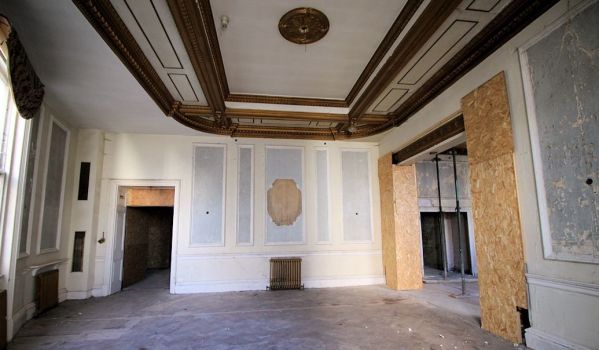
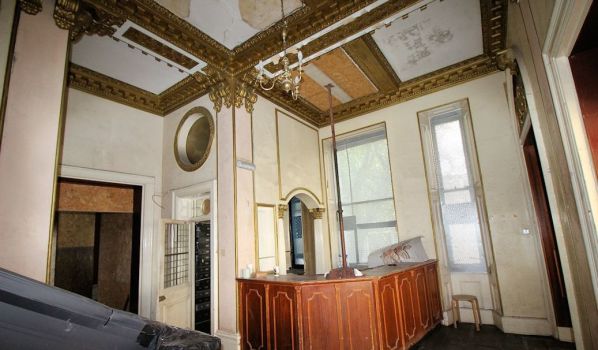
Inside the buiding you'll find a wealth of art deco features including geometric panels around windows and doors and original decorative ceilings.  


Any scope for extension?

According to the agent, there's scope for putting in a roof terrace, which would take advantage of 'partial views' over London's Hyde Park. Or, there is potential to expand by adding three floors to part of the building.


What would you buy with £35m?


Read more at https://www.zoopla.co.uk/discover/property-news/is-this-the-biggest-end-terrace-in-britain/#MQRQjdifgBRYATPo.99

Wednesday, 14 June 2017

Home ownership among younger generations HALVES in just over 20 years across large parts of the UK

Home ownership among younger generations HALVES in just over 20 years across large parts of the UK. Number of young family home owners falls to 31% across England in 2016. The biggest drop was in outer London, where it fell 63% in space of 22 years. Large declines were also recorded in West Yorkshire and Greater Manchester.


The number of young family owning their own homes has halved across large parts of the country in the space of a generation, and the struggle to get on the housing ladder is not restricted to the South East.

Research by The Resolution Foundation found that 31 per cent of 25 to 34-year-olds surveyed were home owners in 2016, compared to 58 per cent in 1994.

Regionally, 30 per cent of those surveyed in West Yorkshire owned homes last year, compared to 61 per cent in 1994.

Similarly, in Greater Manchester, home ownership levels fell to 29 per cent from 59 per cent over the same 22-year period.  
The South West also suffered a decline, to 36 per cent last year from 62 per cent in 1994, while East Anglia fell to 34 per cent from 61 per cent in the same period.

The decrease was most pronounced in outer London, where home ownership dropped to 20 per cent in 2016 from 55 per cent in 1994. 

Big falls were also recorded in other areas of the South East including Brighton, Southampton, Reading and Milton Keynes, with home ownership in the younger age group bracket declined from to 34 per cent last year from 64 per cent in 1994.


The Resolution Foundation argued that such a 'seismic shift' in home ownership puts the younger generation in a very different position from that of the older, baby boomer generation, leaving many more young families living in the private rented sector.

Lindsay Judge, a senior policy analyst at the Resolution Foundation, said: 'London house prices always dominate the headlines, but with all eyes on the capital we're missing the bigger picture.

'From Bristol to East Anglia and up to West Yorkshire, large swathes of young families across the country simply cannot afford to buy their own home.

'This has implications for their living standards in the here and now, but also in the future when their children grow up and they approach retirement without this key asset to draw upon in old age.

'The manifestos show clear intent from all the main parties to ensure home ownership is a possibility for more young families.

'But these pledges need a hefty dose of reality as they depend on vastly increasing the rate at which we are currently building in the UK.' 

House prices fell £1,000 a month, according to the latest monthly index from the Office for National Statistics released this month, which also showed annual property inflation continuing to slow.

The average property price was £216,000 in March 2017 and despite the monthly drop, house prices are still 4.1 per cent higher than a year ago – a difference of £9,000. 

Tuesday, 30 May 2017

Manchester, Birmingham And Edinburgh To Be Star Property Markets This Year

Manchester, Birmingham, and Edinburgh to be Star Property Markets This Year

Recent analysis has suggested that the decentralisation of the UK property investment scene is likely to continue this year, with regional cities being the star performers of 2017. According to the most recent report from property advice specialists JLL, it is Manchester, Birmingham, and Edinburgh that are set to be the prime investment markets this year.
Though decentralisation has been an ongoing process for a while, London has remained very much the prime market for UK property investment. However, JLL’s report suggests that factors such as affordability and the uncertainties of Brexit are going to keep price appreciation in the capital restrained through 2017.
London is expected to experience a flat performance in the prime market and overall price inflation of around 1%. This does beat the 0.5% expected for the nationwide average, but pales in comparison to many of the UK’s key regional cities.
The real hotspots of the UK’s property sector this year are expected to defy the lacklustre UK average growth figure considerably, with Manchester, Birmingham and Edinburgh representing prime examples.
Manchester, for example, saw prices rise by 15% last year, accompanied by 11% growth in rents. Little slowing of this growth is expected for 2017, as city centre properties continue to be in serious short supply and unable to cater to a fast-growing population in what is already one of the UK’s busiest regional markets.
Birmingham is also expected to be one of the hottest hotspots of this year’s property investment scene. This is helped in part by the fact that Birmingham is the first city to receive investment from the Housing Growth Fund. It is also, in a roundabout way, benefiting from the strength of Manchester, particularly for individual investors. Larger, institutional investors have very much been drawn to Manchester, leaving Birmingham as a market which is strong but has been rather overlooked by the bigger fish. Naturally this has been attractive to individual investors, who have been seizing the opportunity to fill the gap.
Edinburgh is another robust market set to achieve leading growth figures this year. The market for family-sized residential properties in the city’s suburbs is especially strong at the moment. The city centre is, naturally, a hub of activity and is currently home to a fast-maturing build-to-rent market. This latter sub-sector is both stimulating activity in the market and creating a relatively large number of opportunities for investors to buy into the property market at the very heart of Scotland’s capital city.


JLL’s report also looks at the nature of construction in the coming year and the impact this will have on investment. Again, this shows London as a lacklustre performer. Nationwide, new build starts are expected to drop off from last year’s levels, but only slightly. In London, however, the drop in new build starts will be dramatic, the report says, even though this is the country’s highest-demand market.
http://www.propertyowl.co.uk/manchester-birmingham-and-edinburgh-to-be-star-property-markets-this-year/

Sunday, 28 May 2017

Rents Fallen Across UK For First Time Since 2009

Rents have fallen in five out of 12 regions across the UK for the first time since 2009, according to HomeLet's May Rental Index.

The heat has been coming out of the rental market, with UK rents tumbling for the first time since 2009.
The average rent on a new tenancy, beginning in May, was £901 – that's 0.3% lower than in the same month of 2016, according to new data from HomeLet, a tenant referencing service.
In London, rents were 3% lower than this time last year.
This is the first time in eight years the HomeLet rental index has reported a fall in rents on an annualised basis.

Why is this happening?

HomeLet’s chief executive officer Martin Totty said that the company’s rental data, “suggests landlords are facing a difficult balancing act between ensuring rents are affordable for tenants in a low wage growth environment, while covering their own rising costs”.

The slowdown in the rental sector mirrors a similar picture elsewhere in the property sector, with Nationwide Building Society revealing in June that house prices had fallen in each of the past three months.

Above: A two-bedroom flat for rent in London's Harrow-on-the-Hill for £1,495 per calendar month


Who does it affect?

Aside from London, rents in four other regions also saw rents on new tenancies slide during May. The north-east of England, the south-east, Yorkshire and Humberside, and Scotland all registered decreases ranging from 2.3% to 0.6%.
In the capital, the slowdown saw average rents drop from £1,572 a month in July 2016, to £1,502 in May.
HomeLet said that last month’s 3% annualised fall was the ‘steepest decline’ reported in London since 2009.

Above: A-two-bedroom flat for rent in north London's Finsbury Park for £1,712 per calendar month


Sounds interesting. What's the background?

Post the 2008 and 2009 credit crunch, a growing shortage of stock lead to 'bidding wars’ in the rental market between prospective tenants. This was most prevalent in London, where the mismatch between supply and demand was most stark.
Up until as recently as a year ago Britain's property market was still being described by commentators as 'overheated'.
But the tables are starting to turn, according to HomeLet. An increasing amount of red tape for landlords such as Right to Rent, and squeezes on the tax reliefs available, mean landlords are weighing up tenant affordability condiserations 'very seriously'.

Top 3 takeaways

  •  Rents across the UK fell by 0.3% in May, the first such fall since December 2009
  •  The average monthly rent now stands at £901
  •  London rent prices fell by 3% in the 12 months since May 2016, the most substantial fall in eight years


Read more at:
http://www.zoopla.co.uk/discover/property-news/uk-rents-fall-for-the-first-time-in-eight-years/#jXGi3Sxx2AJCpWqP.99

Saturday, 27 May 2017

Over 200.000 Empty Homes In The UK

Housing crisis: more than 200,000 homes in England lie empty

Birmingham is the city outside London with the most unused properties, followed by Bradford and Liverpool, new figures show.


More than 200,000 homes in England with a total value of £43bn were empty for at least six months during 2016 despite the desperate shortage of properties to rent and buy.
According to official figures, Birmingham was the worst affected city outside London with 4,397 empty homes worth an estimated £956m, followed by Bradford and Liverpool.
The wealthy borough of Kensington and Chelsea was the worst performer in London as super-rich owners rejected renting them out or selling up in favour of leaving their properties lying idle.
The royal borough had 1,399 empty homes worth £664m, compared with second-placed Croydon, which had 1,216 empty homes worth £577m.
Across London there were 19,845 homes sitting idle for over six months in 2016, which amounted to £9.4bn worth of property, based on the average price in London of £474,704.
In response squatters groups have sought to occupy empty homes, with one group in January taking over a £15m central London property purchased by a Russian oligarch in 2014 to open it as a homeless shelter.
Councils and the government have worked to cut the number of empty homes, primarily by reducing tax incentives which encouraged owners to leave properties unused.
In recent years most councils have increased council tax bills on second homes and adopted stricter rules on council tax discounts for empty homes.
But some councils appear to have worked harder than others to make inroads into the stock of empty homes. While Birmingham recorded a 13% jump in empty properties in the last year and Liverpool suffered a 5% rise to 3,449, Manchester registered the greatest fall over a decade, dropping 88% to 1,365.
Towns and cities in the north and Midlands filled the top 20 list of local authority areas with the highest number of empty homes. Blackburn shot up the rankings to ninth place after a 35% jump, the biggest increase of any authority outside London, pushing neighbouring Bolton into 10th place.
In 2006, Newham in East London, was the worst performing borough in the capital, but dramatically cut the number of empty homes over the following 10 years from 2,070 to 593. Likewise, Lambeth has recorded a fall from 2,807 in 2006 to 756 in 2016.
The trend for the world’s super-rich to invest in prime London property as a way to safeguard their wealth, without the need to secure a rental income, has meant the number of empty homes in Kensington and Chelsea rose 22.7% over the same period and 8.5% since 2015.
Property Partner said a large drop in the number of empty homes across England from 2006 stalled in 2015. The figures for 2016 showed little progress.

Have you noticed a lot of empty houses near you?
https://www.theguardian.com/society/2017/apr/20/over-200000-homes-in-england-still-lying-empty-despite-housing-shortages

Monday, 22 May 2017

Some Of The Most Popular 2017 Viewed Rental Properties

From stunning studio flats to kooky live/work set-ups – check out some of the most viewed properties to rent from the past few months.

We’ve scoured the site and rounded up some of the most popular properties listed for rent and it’s fair to say there are some truly incredible homes to let at the moment.

A five-bedroom London home to strive for…

This five-bedroom modern home in Totteridge has all the mod-cons, a dressing room in the master bedroom, and a garden that’s perfect for sunbathing. Anyone for a summer BBQ on the terrace?


A live/work home for the creative minded…

This six-bedroom live-work set-up is East London’s Hackney area is perfect for anyone who likes to do things a little differently. A warehouse conversion – the bedrooms are all based off a huge open-plan living area – one for the creatives out there!


A sleek and chic studio flat near Shepherd’s Bush…

These Hammersmith studio apartments boast a private en-suite and kitchenette – perfect for a couple – and come with all mod-cons as well as some crazy interior decor.

A futuristic flat up in Glasgow

This furnished three-bedroom apartment in Glasgow is part of an award-winning property development that has accesss to a huge private rooftop garden – plus loads of amazing extras like HD video entry. Very high-tech!


Relaxing at home in the Sky Gardens…

This new-build in the Nine Elms development of Vauxhall Sky Gardens is, frankly, stunning. Aside from the tastefully done apartments residents get access to some incredible communal spaces – just look at that gym overlooking the London skyline!


Would you rent any of these beautiful places?

Check out more here: 

http://www.rightmove.co.uk/news/most-popular-rental-properties/